The phrase “new normal” has become a fixture in public discussions about climate change, implying that the planet’s weather system will eventually settle into a new but stable state. Scientists say that idea is not only wrong — it is actively dangerous. With global greenhouse gas emissions still rising and the 1.5°C warming threshold now effectively out of reach, the climate will keep changing in ways that make past patterns an unreliable guide to the future.
The core problem with the “new normal” framing is that it treats a threshold like 1.5°C of warming as a step from one stable state into another. In reality, each fraction of a degree of additional warming produces a meaningfully different world. Australia’s National Climate Risk Assessment has outlined how the country looks very different at 2°C of warming compared with 1.5°C, and again at 2.5°C or 3°C. Thinking of any of those futures as a settled normal, researchers argue, invites complacency about the scale and speed of change still to come.
Climate itself is defined as the statistical pattern of weather over 30 years, not day-to-day conditions. But that definition depends on past data that is increasingly irrelevant as the atmosphere changes faster than humans have ever experienced.
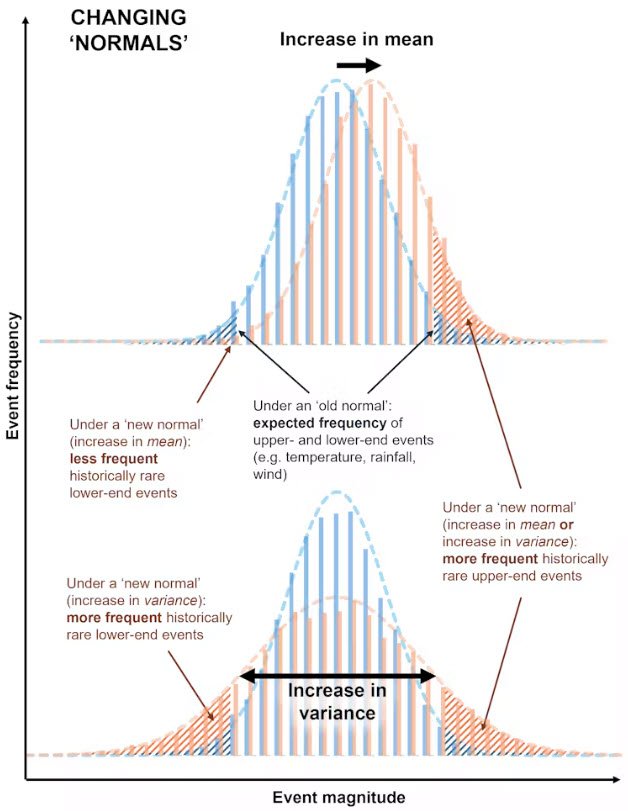
Phenomena such as “climate whiplash” — abrupt swings from drought to flood — and pyrocumulus clouds, the thunderstorms that form from the heat of large wildfires, were virtually unknown a few decades ago. Record-breaking European heatwaves, once considered extreme outliers, are now arriving more frequently, more intensely, and lasting longer. Historically rare events are becoming more likely before societies have had time to understand or prepare for them.
The risks are compounded by factors beyond the atmosphere itself. Even a storm surge or heatwave that falls within historically known ranges now affects far more people and infrastructure than it would have 50 years ago, simply because coastal populations have grown and natural habitats have become more fragmented. Climate change acts as a risk multiplier on top of those existing vulnerabilities, steadily narrowing the window for effective response.
Researchers emphasise that the answer is not to choose between cutting emissions and adapting to change — both are necessary. Limiting future warming makes adaptation more achievable, while investing in adaptation is unavoidable given the warming already locked in. Practical measures include accelerating the shift to clean energy and electric transport, embracing regenerative agriculture, and bringing climate adaptation planning to the centre of policy.
The first step, scientists say, is abandoning the comforting notion of a new normal altogether, and accepting that the climate will continue to intensify until emissions are brought to a halt. Homo sapiens have adapted to environmental change throughout history; the challenge now is to do so deliberately, at speed, and without the false reassurance that stability lies just around the corner.