A layer of cold, fresh water that forms a natural barrier between the ocean’s surface and its depths has undergone a rapid and unexpected transformation since 2016, according to an article research published in The Conversation. The Antarctic intermediate water — which sits between roughly 700 and 1,200 metres beneath the surface — has been growing saltier, denser, and deeper at a pace that scientists say is unprecedented in the observational record, and may allow significantly more heat to penetrate into the deep ocean.
Antarctic intermediate water forms each southern spring and summer as sea ice around Antarctica melts, injecting fresh water into the surrounding ocean. That water sinks and spreads northward into the Atlantic, Pacific, and Indian oceans, acting as a lid that limits how much heat absorbed at the sea surface can descend into deeper waters. For at least four decades, from the 1970s through 2015, the layer had been growing steadily lighter and fresher each year as the seasonal melt cycle continued. Then, in 2016, Antarctic sea ice levels began to fall sharply — and the trend reversed within just a few years.
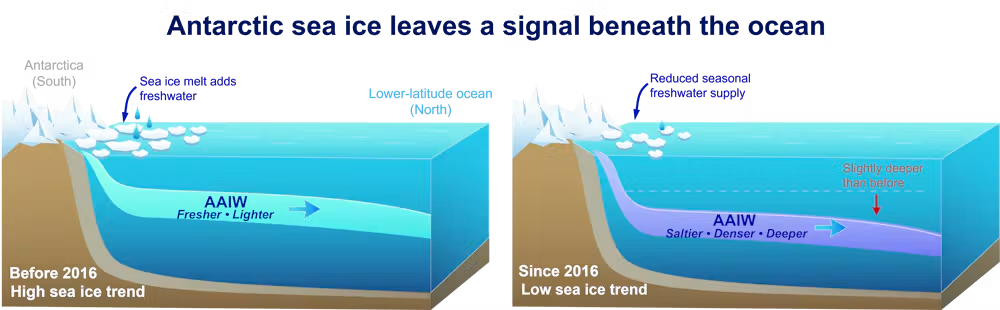
The research team used 20 years of data from the Argo programme, a global network of robotic ocean floats that measure temperature and salinity and transmit data by satellite. Researchers built three independent reconstructions of the ocean record from Argo data and cross-checked them against satellite sea-ice observations and separate ocean studies covering 2004 to 2024. All three versions showed the same pattern: steady freshening through 2015, followed by a sharp shift to saltier, denser, and deeper water from 2016 onward. The change was most pronounced in the South Atlantic.
The scientists note that similar reversals have appeared in ocean sediment records tied to the end of past ice ages, suggesting the phenomenon is not entirely without precedent. The critical difference, they say, is speed: historical shifts of this kind unfolded over centuries or longer, whereas the current reversal has taken less than a decade. The ocean already absorbs more than 90 percent of the excess heat added to the climate system by rising greenhouse gas emissions, and where that heat ultimately ends up will shape how global temperatures evolve in coming decades. Other parts of the ocean circulation system, including the Atlantic’s overturning circulation, are also showing signs of disruption.
The researchers are candid about the limits of current knowledge. It remains unclear whether the reversal represents a lasting shift or a temporary fluctuation, and the downstream effects on ocean circulation and heat storage are not yet understood. The authors call for sustained investment in ocean monitoring programmes like Argo to track whether the change persists, and argue that rapid cuts in greenhouse gas emissions remain the most direct way to limit further warming and give Antarctic sea ice a better chance of recovery.