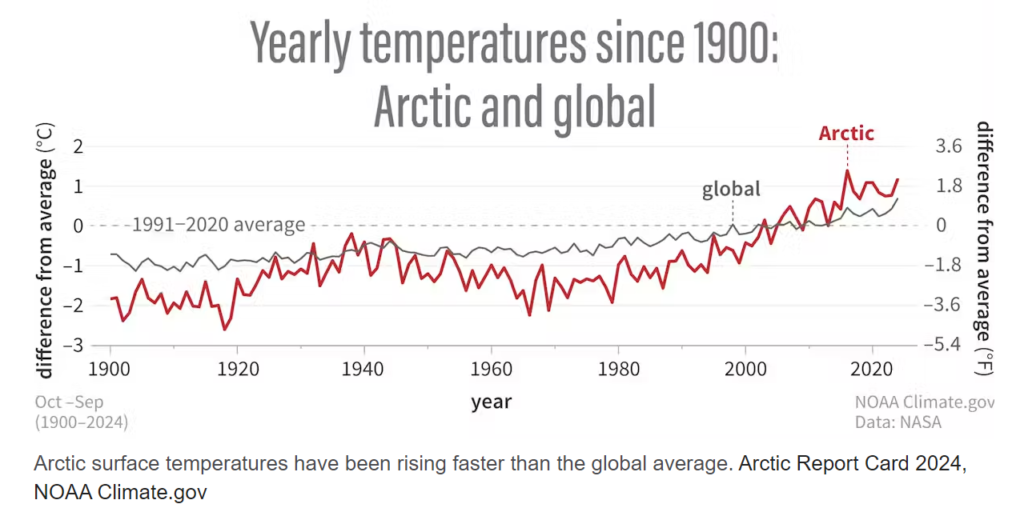
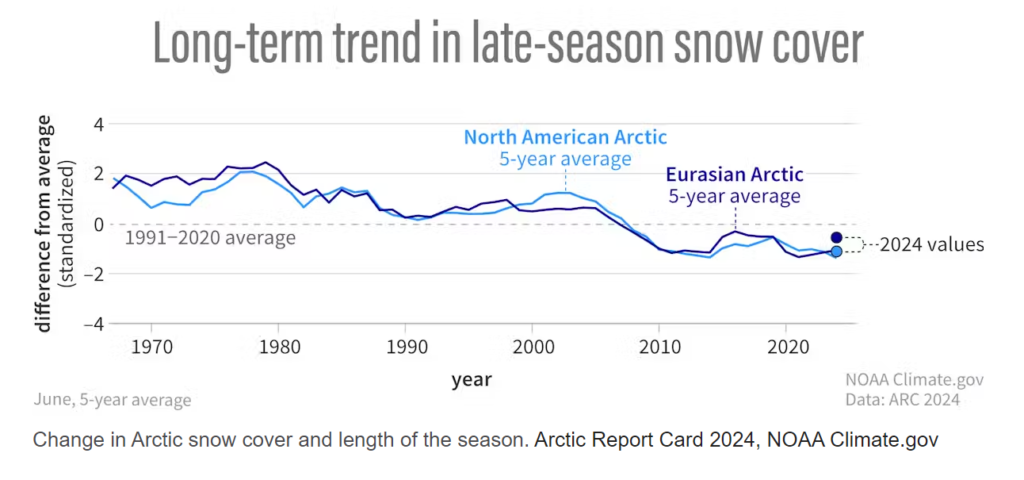
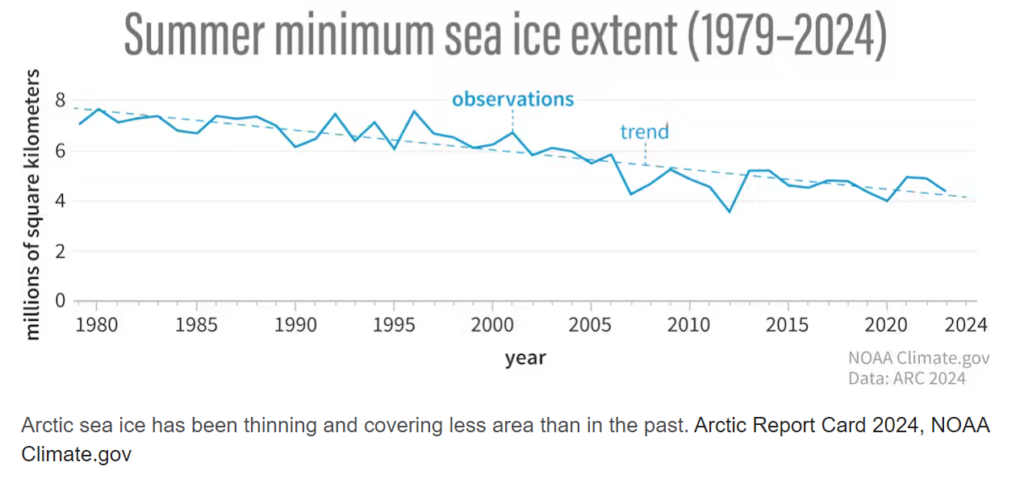
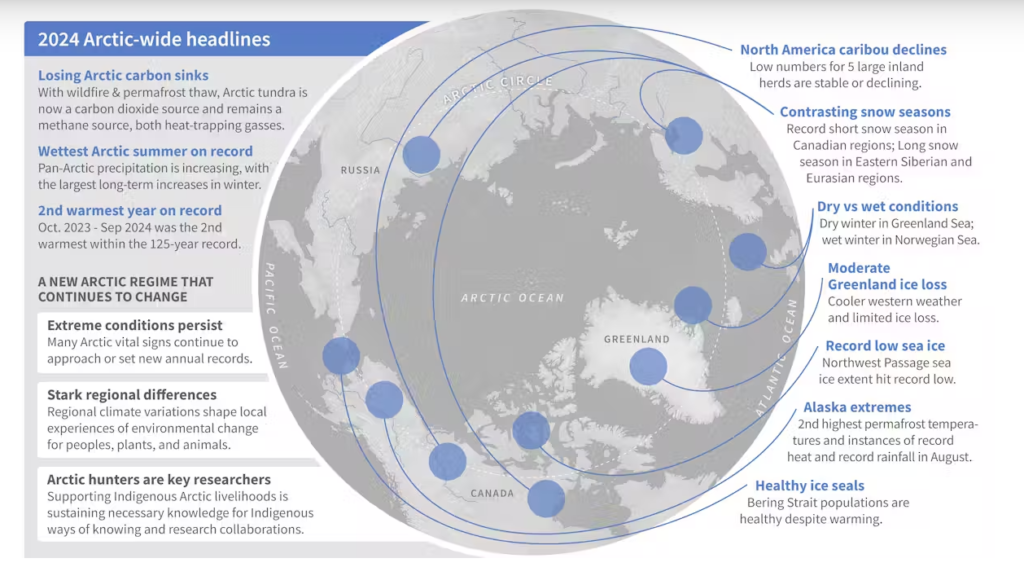
The 2024 Arctic Report Card, released by the National Oceanic and Atmospheric Administration (NOAA), highlights significant and accelerating environmental transformations in the Arctic region. Key findings include record-high surface air temperatures, unprecedented sea ice loss, increased wildfire activity, and the Arctic tundra shifting from a carbon sink to a carbon source. These developments have profound implications for global climate patterns, ecosystems, and human communities, underscoring the urgent need for comprehensive climate action.
Important Points
- Record Temperatures: The Arctic is warming at approximately four times the global average, with 2024 marking one of the warmest years on record.
- Sea Ice Decline: The region is projected to experience its first ice-free day before 2030, earlier than previously anticipated.
- Wildfires: There is an increase in the frequency and intensity of wildfires, contributing to higher greenhouse gas emissions and further warming.
- Permafrost Thaw: Thawing permafrost is releasing significant amounts of carbon dioxide and methane, exacerbating climate change.
- Ecosystem Impacts: Changes in sea ice and temperature are affecting marine and terrestrial ecosystems, including shifts in species distributions and habitat loss.
Read More Here: Arctic Report Card 2024: Rapid Environmental Changes and Emerging Challenges