A new paper published in Nature Climate Change argues that species hybridization should be formally recognized as part of the global climate change agenda, warning that the phenomenon remains poorly understood and largely absent from conservation and climate policy discussions.
Hybridization — the interbreeding of individuals from two distinct species — occurs naturally, but researchers contend that climate change is accelerating and reshaping the process in ways that could have profound consequences for biodiversity. As rising temperatures, shifting seasons, and habitat disruption force species into new ranges and alter the timing of reproduction, previously isolated populations are coming into contact more frequently, creating new opportunities for interbreeding across species boundaries.
The implications are complex and cut in multiple directions. In some cases, hybridization may offer a lifeline, introducing genetic variation that helps populations adapt to rapidly changing conditions — a process sometimes called adaptive introgression. In other cases, it poses a serious threat: widespread hybridization can erode the genetic distinctiveness of vulnerable or endangered species, effectively dissolving boundaries between populations that evolved separately over thousands or millions of years. Conservation managers have long grappled with hybrid individuals in the field, but without clear frameworks for how climate-driven hybridization fits into broader biodiversity goals, responses have been inconsistent.
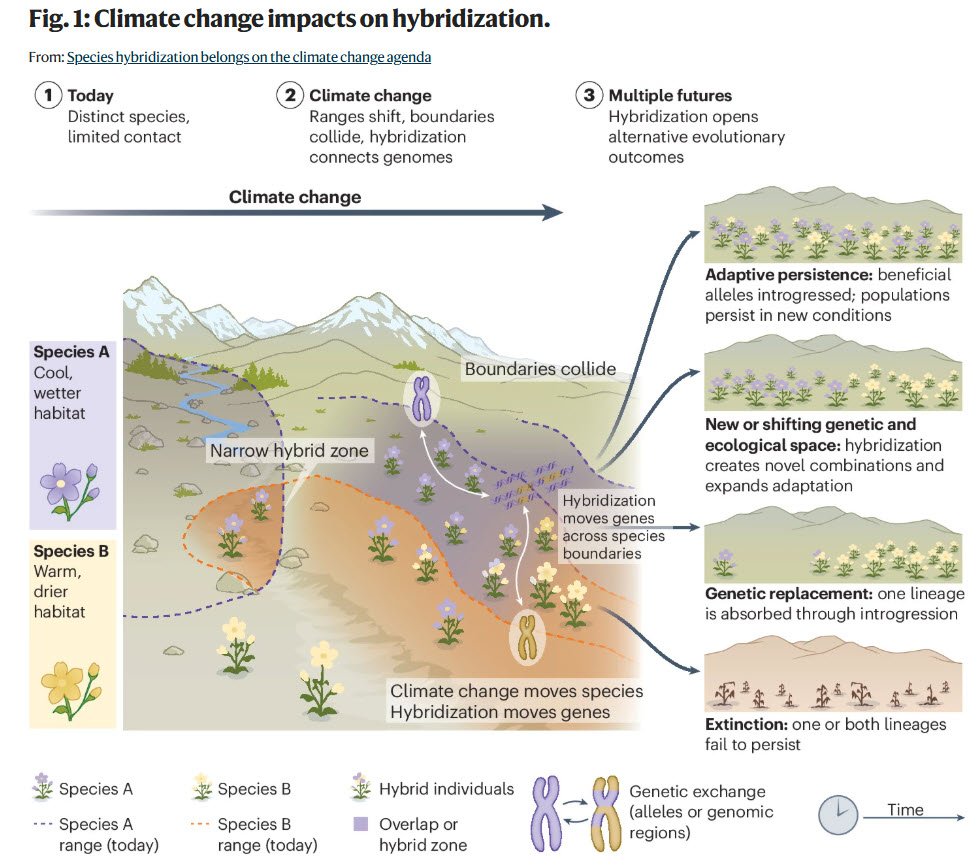
The authors of the study highlight that current climate assessments and international biodiversity frameworks have largely overlooked hybridization as a climate impact, despite growing evidence that it is already occurring across a wide range of taxa — from fish and amphibians to birds, mammals, and plants. They call for more systematic monitoring of hybrid zones and for researchers to better document how those zones are shifting as climates change. They also urge policymakers to consider hybridization explicitly when designing conservation strategies, protected area management plans, and species recovery programs.
The paper adds to a broader scientific conversation about how climate change is reshaping the relationships between species — not just driving extinction or range shifts, but fundamentally reorganizing ecological communities in ways that standard models may not fully capture. By putting hybridization on the agenda, the authors argue, scientists and policymakers will be better positioned to anticipate and manage one of climate change’s more nuanced biological consequences.